Executive Briefing: The United Kingdom’s flagship Freeports and Investment Zones have evolved into mature regional industrial powerhouses. Anchored by major clusters at Teesside, Humber, and the Solent, these designated customs and tax zones are attracting high-value foreign direct investment in green hydrogen, battery gigafactories, and maritime robotics.
Tariff Inversions and Capital Allowances in Action
The core commercial appeal of UK Freeports lies in their integrated customs sites. Businesses importing raw components pay zero tariffs on inputs if the finished products are subsequently re-exported. If sold into the domestic UK market, duty is calculated on the finished good or raw material—whichever is lower. This tariff inversion, paired with 100% first-year capital allowances for plant and machinery, provides an unmatched ROI framework.
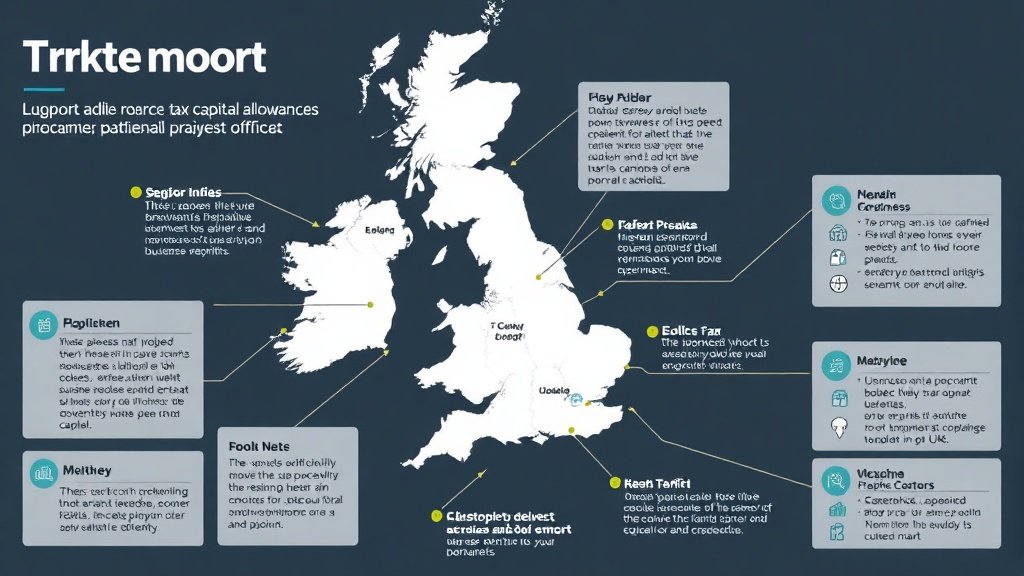
Clean Energy & Decarbonization Hubs
Teesside and Humber have emerged as the heartland of UK carbon capture, usage, and storage (CCUS). The East Coast Cluster unites heavy industrial emitters through shared subsea CO2 pipeline networks, positioning the regions as world-leading net-zero industrial zones.
| Freeport Cluster | Primary Industrial Anchor | Key Infrastructure Asset | Major FDI Projects |
|---|---|---|---|
| Teesside Freeport | Green Hydrogen & Heavy CCUS | Teesworks Deepwater Quay | Offshore wind blade fabrication & sustainable aviation fuel |
| Humber Freeport | Chemicals & Bio-Energy CCS | Ports of Immingham and Hull | Rare earth element processing & clean ammonia terminals |
| Solent Freeport | Maritime Autonomy & Aerospace | Port of Southampton Container Terminal | Autonomous surface vessels & aerospace composite tooling |
What tax benefits apply within designated UK Freeport tax sites?
Eligible businesses enjoy 100% business rates relief, full Stamp Duty Land Tax (SDLT) exemption on commercial land purchases, 0% employer National Insurance contributions on new hires up to £25,000 for three years, and enhanced capital allowances.
How do Freeports differ from standard UK enterprise zones?
Freeports integrate both tax site benefits and customs site freedoms under one coordinated authority, enabling businesses to store, process, and re-export goods without upfront customs clearance duties or import VAT.
Related Publications & Curriculum Pillars



Related Research & Authoritative Analyses
- ★ SAPO in Aramco: Safety Officer Approval & CBT Guide
- › Radical Active Listening & Forensic Validation: Emotional De-escalation, Mirroring & Hostage-Negotiation Empathy Tradecraft
- › Commercial Real Estate Underwriting in 2026: Cap Rate Trends, SOFR Swaps & Debt Yields
- › Executive Presence & High-Stakes Public Address: Vocal Cadence, Rhetorical Ethos & Boardroom Oratory
- › The Commercial Kitchen Line-Check & HACCP Food Safety Guide: Master Daily Opening, Closing & Temperature SOPs