Strategic Intelligence Briefing: US Import Tariffs China EU Supply Chain
Renewed United States plans for sweeping import tariffs targeting China, the European Union, and major trade partners have triggered urgent supply-chain rerouting across manufacturing, electronics, and retail sectors. Corporate procurement leaders are weighing tariff pass-through inflation against multi-year reshoring capital investments.
Front-Loading Inventory & Rules-of-Origin Scrutiny
Importers across consumer electronics, industrial machinery, and pharmaceuticals are accelerating Q4 inventory front-loading while auditing supplier bills of materials. Customs authorities are simultaneously tightening rules-of-origin enforcement to block transshipment loopholes through third-party assembly hubs.
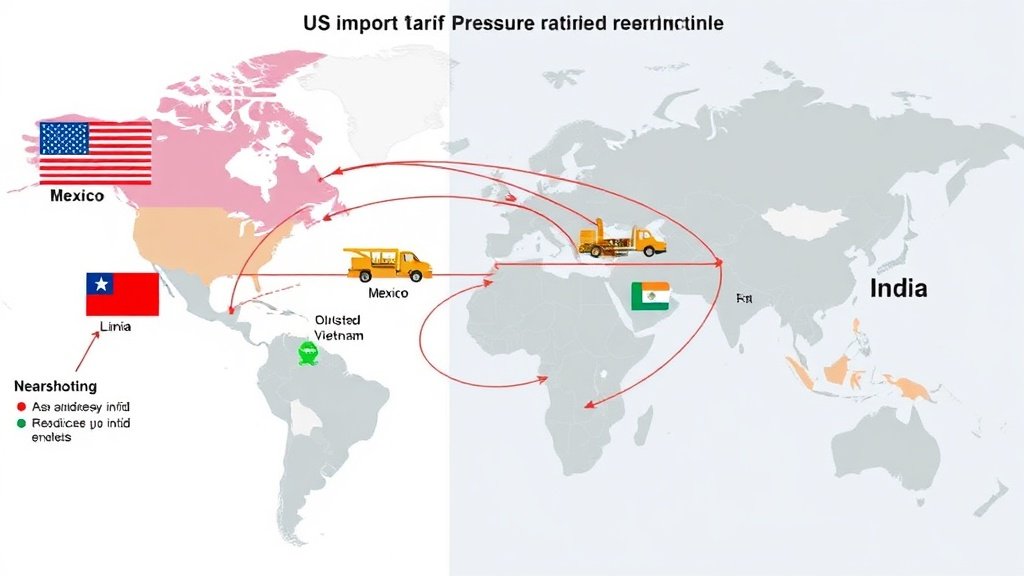
Nearshoring Winners vs. Consumer Margin Compression
While domestic steel, semiconductor packaging, and automated assembly plants gain protective pricing power, retail and automotive OEMs with thin margins face difficult tradeoffs between absorbing higher input costs and passing price increases to inflation-weary households.
Key Takeaways & Actionable Insights (US Import Tariffs China EU Supply Chain)
Readers and practitioners evaluating this shift should anchor decisions around three verified operational coordinates:
- Supplier Diversification: Multinationals accelerate ‘China+1’ and North American USMCA sourcing strategies.
- Retaliatory Export Risks: US agricultural and aerospace exporters brace for reciprocal EU and Asian counter-tariffs.
- Customs Compliance Audits: Automated origin-tracing software becomes mandatory for tier-1 importers.
Comparative Benchmark Matrix
| Sector | Tariff Exposure | Primary Supply-Chain Shift | Price Pass-Through Risk |
|---|---|---|---|
| EVs, Batteries & Clean Tech | Very High | Domestic US / Ally mineral sourcing | High unless subsidized locally |
| Industrial Machinery & Auto | High (EU & Asia lanes) | USMCA / Midwest plant expansion | Moderate–High over 2–4 quarters |
| Consumer Electronics | Moderate–High | India & Vietnam final assembly | High on non-exempt SKUs |
Frequently Asked Questions
How do US import tariffs affect domestic inflation?
Which countries benefit most from US-China tariff friction?
Related Publications & Curriculum Pillars



Related Research & Authoritative Analyses
- › GCC Railway Project 2026: Cross-Border Passenger & Freight Rail, Customs Interoperability & Economic Integration
- › Australia Visa Rule Shakeup: Mandatory 8503 ‘No Further Stay’ on Visitor Visas & WHM Extension Pivot
- › Strait of Malacca Security Architecture: Maritime Chokepoints & Naval Deterrence
- › NEOM 2026 Industrial Roadmap & The Line Construction Realities: Logistics Hubs, Modular Engineering & Port of Oxagon Expansion