Widely recognized as one of the most competitive and prestigious examinations in the world, the UPSC Civil Services Examination (CSE 2027) administered by the Union Public Service Commission represents the premier conduit to policymaking and public administration in India. With over one million applicants competing for approximately 1,000 coveted appointments across the IAS, IPS, IFS, and IRS, clearing the three-stage exam demands exceptional intellectual stamina and analytical precision.
1. The Three-Stage Examination Architecture
The examination evaluates candidates across three rigorous phases: the preliminary objective screening (General Studies Paper I and the qualifying CSAT), the descriptive written Mains examination comprising nine papers (1,750 total marks), and the Personality Test interview (275 marks) conducted at Dholpur House in New Delhi.
Premier All India & Central Civil Services
- Indian Administrative Service (IAS): District governance (DM/Collector) and apex ministry policy execution (Cabinet Secretary).
- Indian Police Service (IPS): Law enforcement leadership, intelligence agencies (IB, RAW), and paramilitary commands (SP to DGP).
- Indian Foreign Service (IFS): Sovereign diplomacy, international multilateral treaties, and ambassadorial representation.
2. UPSC CSE Examination & Cadre Selection Pipeline
The comprehensive multi-stage selection lifecycle from initial notification to Lal Bahadur Shastri National Academy of Administration (LBSNAA) induction is diagrammed below:
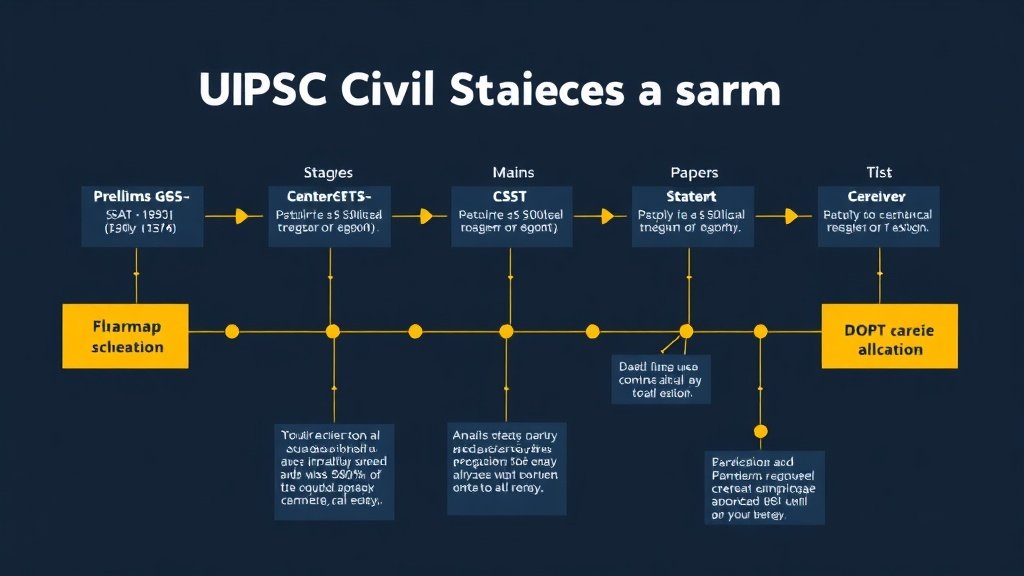
As visualized above, consistent answer writing practice integrating current constitutional case studies is vital to scoring competitive marks in General Studies Papers II and III. For broader perspectives on public administration and institutional leadership, explore Sapiotic’s strategic analysis on mega-project governance and administrative frameworks.
3. Frequently Asked Questions (FAQ)
What is the minimum qualifying score for the CSAT paper?
Civil Services Aptitude Test (CSAT / Paper II) is strictly qualifying in nature; candidates must score at least 33% (66 marks out of 200) for their General Studies Paper I to be evaluated.
How does the UPSC Zonal Cadre Allocation policy work?
The Department of Personnel and Training (DoPT) groups Indian states into five geographical zones. Candidates indicate preferences for states across each zone, with final allocations determined by merit rank and affirmative reservation quotas.
Related Research & Authoritative Analyses
- › CSS Competitive Exam General Science & Ability 2027: Complete Syllabus Breakdown
- › Australia Secondary & Special Education Teacher Jobs 2027: AITSL Assessment, Pay & Regional Grants
- › UPSC Civil Services Examination (CSE) 2026 Roadmap: Prelims GS-1 & CSAT Strategy, Mains Answer Writing & Optional Subject Scoring Trends
- › CSS Competitive Exam 2027: Group Allocation, Merit Cutoffs, Syllabus Strategy & Cadre Salaries Guide
🔥 Related High-Demand Job Openings
Explore verified employment vacancies across the UAE, Saudi Arabia, and International projects:


