Theological & Epistemic Briefing: Ibn Rushd (1126–1198 CE), venerated in Western history as Averroes, served as the Chief Qadi of Cordoba and stands as the foremost commentator on Aristotle in world history. In his seminal work Fasl al-Maqal (The Decisive Treatise), Ibn Rushd constructed an unassailable legal fatwa asserting that the study of demonstrative philosophy (Burhan) is not merely permitted by the Quran, but an obligatory divine command (Wajib), establishing that truth cannot contradict truth.
Historical Context & Doctrinal Lineage
The profound thought of Ibn Rushd (Averroes) marks a decisive turning point in the intellectual history of Islam (Falsafa / Maliki Jurisprudence / Demonstrative Epistemology). By reconciling acute philosophical inquiry with transcendent revelation, this work established enduring epistemological benchmarks for generations of subsequent thinkers.
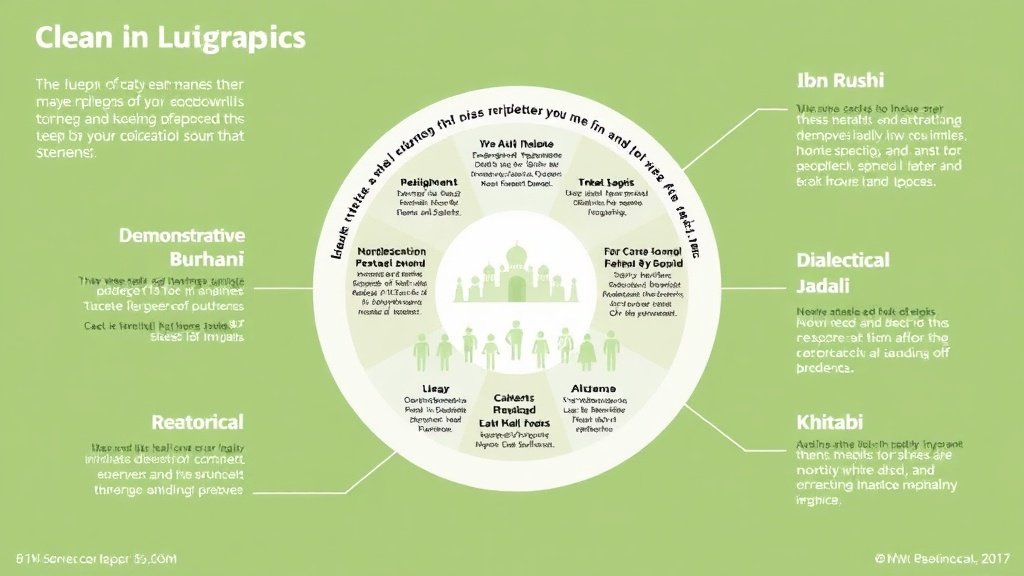
Figure: Conceptual Metaphysical Framework & Dialectical Architecture of Ibn Rushd (Averroes).
Core Theological Pillars & Epistemology
To fully comprehend the lasting impact of this masterwork, scholars analyze four central metaphysical and epistemic pillars that elucidate the relationship between divine reality, human consciousness, and moral duty:
The Non-Contradiction Axiom (Truth Cannot Oppose Truth)
Demonstrative philosophical proof (Burhan) and authentic divine revelation (Sharia) are two harmonious expressions of single ultimate truth; any apparent divergence necessitates allegorical interpretation (Ta’wil).
Tripartite Epistemic Taxonomy
Human intellects access truth through three distinct psychological capacities: Demonstrative thinkers (philosophers), Dialectical thinkers (theologians/Mutakallimun), and Rhetorical believers (the general public).
Hermeneutics of Allegorical Interpretation (Ta’wil)
Scripture employs metaphorical language to convey metaphysical realities to non-philosophers without misleading them, while demonstrative scholars uncover the underlying intellectual causes.
Refutation of Radical Occasionalism
Defended natural causal efficacy and secondary causes against fatalistic determinism, arguing that denying objective causality invalidates human knowledge and scientific inquiry.
Comparative Epistemic Matrix
The matrix below outlines the primary theological doctrines of Ibn Rushd (Averroes) against contrasting paradigms across world religious philosophy:
| Dimension | Ibn Rushd (Averroes)’s Synthesis | Philosophical & Modern Relevance |
|---|---|---|
| Ultimate Epistemic Authority | Demonstrative Harmony of Reason & Sacred Text | Overcomes both blind literalist fundamentalism and dry reductionist secularism. |
| Cosmic Relationship | Divine Immanence Grounding Real Causality | Affirms the reality of human responsibility and scientific intelligibility. |
| Spiritual Destiny | Loving Devotion, Right Action & Contemplation | Provides experiential fulfillment transcending theoretical abstraction. |
Frequently Asked Questions
What is the primary contribution of Ibn Rushd (Averroes) to Islam?
How does this framework address modern ethical and existential dilemmas?
Related Publications & Curriculum Pillars


Related Research & Authoritative Analyses
- › Emotional Resilience, Overcoming Anxiety & Divine Comfort: Mufti Menk Islamic Guidance
- › Trust Allah with What You Cannot Control: Nouman Ali Khan on Tawakkul and Surah Al-Muzzammil
- › The Prophetic Seerah as a Living Blueprint: Dr. Yasir Qadhi Modern Theological Synthesis
- › Kalam Epistemology & Rational Tafsir: Imam Fakhr al-Din al-Razi on Mafatih al-Ghayb & The Limits of Human Reason 2027