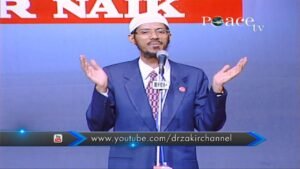
Few contemporary Muslim orators have shaped global public discourse on comparative faith as decisively as Dr. Zakir Naik. Grounding his discourse in encyclopedic textual citations across world scriptures, the work of Dr Zakir Naik Quran modern science comparative religion represents an influential intellectual paradigm that bridges orthodox Salafi epistemology with rationalist apologetic debates.
1. The Concordist Hermeneutic: Aligning Revelation with Empirical Observation
Dr. Naik’s signature intellectual methodology rests on what scholars term theological concordism: demonstrating that verses revealed in 7th-century Arabia anticipated established facts of modern astronomy, embryology, geology, and hydrology. By distinguishing between established scientific consensus and speculative theoretical hypotheses, Dr. Naik argues that the Quranic text displays transcendent foreknowledge impossible for an unlettered mortal.
Core Scriptural Anchors in Naik’s Epistemology
- Cosmological Origin (The Big Bang): Surah Al-Anbiya (21:30) detailing how the heavens and the earth were joined together before being cleaved asunder.
- Cosmic Expansion: Surah Adh-Dhariyat (51:47) affirming that the universe was constructed with power and is being steadily expanded (wa inna la-musi’un).
- Solar & Lunar Orbits: Surah Al-Anbiya (21:33) refuting geocentrism by affirming that both celestial bodies swim in an orbit (kullun fi falakin yasbahun).
2. The Quranic Science Concordance Matrix
To analyze the systematic framework through which Dr. Zakir Naik evaluates scriptural integrity alongside empirical data, the following epistemological matrix structures his apologetic proofs:

As visualized above, Dr. Naik’s methodology prioritizes unequivocal Arabic linguistic root analysis before correlating verses with peer-reviewed empirical phenomena.
3. Comparative Religion: Scriptural Parallels Across World Faiths
A defining hallmark of Dr. Naik’s lectures is citing chapters and verses from the Hindu Vedas, the Upanishads, the Hebrew Tanakh, and the Christian New Testament to establish strict monotheism (Tawheed):
| Scriptural Tradition | Primary Source Citation | Textual Passage Meaning | Theological Synthesis in Naik’s Discourse |
|---|---|---|---|
| Hindu Scriptures | Chandogya Upanishad 6:2:1 & Svetasvatara Upanishad 4:19 | “Ekam evadvitiyam” (God is one without a second); “Na tasya pratima asti” (Of Him there is no image) | Asserts that the primordial core of ancient Sanatana Dharma taught formless, uncompromised monotheism. |
| Christian New Testament | Gospel of Mark 12:29 & Gospel of John 14:28 | “The Lord our God, the Lord is one”; “The Father is greater than I” | Demonstrates that Jesus Christ taught divine unity and subservience to the Creator rather than self-divinity. |
| Islamic Quran | Surah Al-Ikhlas (112:1–4) | “Say: He is Allah, the One; Allah the Eternal Absolute…” | The definitive, non-negotiable touchstone of monotheism against which all theological concepts are verified. |
4. Impact on Global Dawah and Academic Discourse
Through the Peace TV network and massive live open-mic question-and-answer forums across South Asia, the Middle East, and the Western world, Dr. Zakir Naik popularized an aggressive, forensic debate style. While contemporary academic theologians frequently debate the philosophical boundaries between empirical science and metaphysical revelation, Dr. Naik’s lectures remain foundational historical benchmarks in 21st-century Islamic apologetics.