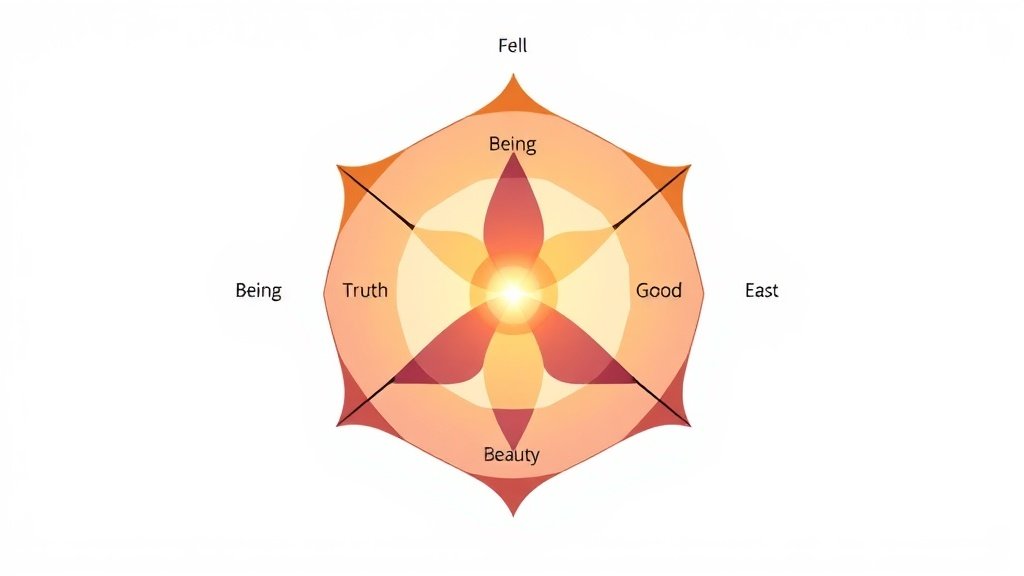
Theological Framework: Bishop Robert Barron, founder of Word on Fire Catholic Ministries, has spearheaded an intellectual and aesthetic renaissance in contemporary Christian apologetics. Championing the Via Pulchritudinis (The Way of Beauty), Barron posits that in a skeptical, postmodern culture resistant to didactic moralism and dogmatic assertion, evangelization must begin not with ‘what is true’ or ‘what is good’, but with ‘what is beautiful’.
1. Leading with Beauty: The Postmodern Gateway to Transcendent Truth
Modern secular culture is intensely allergic to authoritative moral commandments and abstract dogmatic propositions. When told how to behave, the modern secular mind suspects ideological manipulation. However, when confronted with the breathtaking architecture of Chartres Cathedral, Dante’s Divine Comedy, or the sacrificial life of Mother Teresa, the cynical intellect disarms. Beauty captures the soul unawares, drawing it toward goodness and ultimately toward ontological truth.

2. St. Thomas Aquinas & The Metaphysics of Being (Ipsum Esse Subsistens)
Barron systematically refutes the mechanistic view of God popularized by both religious fundamentalism and the New Atheists—the misconception that God is a ‘supreme being’ inside the universe. Grounded in Thomistic metaphysics, Barron articulates God as Ipsum Esse Subsistens—the sheer, unconditioned Act of Being itself by which everything exists from moment to moment:
- Contingency of Creation: Everything in the cosmos is conditioned, finite, and dependent; it requires an unconditioned ontological ground for its continuous sustenance.
- Faith and Reason in Synergy: Faith does not bypass rational inquiry; it is an act of the intellect surrendering to a truth that exceeds, yet never contradicts, human reason.
- Christological Humanism: The Incarnation demonstrates that God’s glory does not crush human flourishing; in the words of St. Irenaeus, ‘The glory of God is man fully alive.’
3. Dismantling the Myth of Scientific vs Theological Conflict
Bishop Barron vigorously engages scientific naturalism, illustrating that empirical science investigates physical mechanisms, while metaphysics and theology address the existential mystery of why there is something rather than nothing. The greatest scientific minds—from Gregor Mendel to Georges Lemaître (the Catholic priest who formulated the Big Bang theory)—operated within a deeply sacramental cosmos.
| Aesthetic & Philosophical Domain | Secular Disenchanted Interpretation | Thomistic Sacramental View |
|---|---|---|
| Cosmic Existence | Brute, purposeless quantum fluctuation | Generous overflowing gift of Ipsum Esse Subsistens |
| Human Desire | Evolutionary survival adaptations | Infinite thirst that can only rest in the Infinite Good |
| Suffering & The Cross | Absurd, meaningless biological friction | The ultimate triumph of self-emptying divine love over violence and death |
Frequently Asked Questions (FAQ)
Why does Bishop Barron prioritize ‘Beauty’ in evangelization?
Beauty is non-aggressive. It does not argue or command; it invites contemplation. Once someone is captivated by beauty, they naturally inquire into the truth and goodness that generated that beauty.
How does Thomism define God differently from modern atheism?
Atheism criticizes a mythological ‘supreme object’ in the sky. St. Thomas Aquinas defined God not as an entity in the universe, but as the uncaused source of all being—Existence itself.
Related Publications & Curriculum Pillars


Related Research & Authoritative Analyses
- › Catholic Social Doctrine & Universal Fraternity: Pope Francis Encyclicals on Global Justice
- › Integral Ecology & Human Fraternity: Pope Francis on Fratelli Tutti, Catholic Social Ethics & Ecological Conversion 2027
- › The Restless Heart & Divine Light: Saint Augustine on Confessions, City of God & The Metaphysics of Grace 2027
- › Saint Francis of Assisi: Canticle of the Creatures, Radical Simplicity & Ecological Theology 2027