Theological & Epistemic Briefing: Bhai Vir Singh (1872–1957), heralded as the Sixth River of Punjab and the father of modern Punjabi literature, was the spiritual and intellectual vanguard of the Singh Sabha renaissance. Through his immortal mystical epic ‘Rana Surat Singh’ and monumental exegesis of the Guru Granth Sahib (Santhya Sri Guru Granth Sahib), he revived the pristine egalitarian ethos of the Khalsa, synthesizing transcendent metaphysical devotion with active worldly dignity.
Historical Context & Doctrinal Lineage
The profound thought of Bhai Vir Singh marks a decisive turning point in the intellectual history of Sikhism (Modern Renaissance / Mystical Poetry / Gurbani Exegesis). By reconciling acute philosophical inquiry with transcendent revelation, this work established enduring epistemological benchmarks for generations of subsequent thinkers.

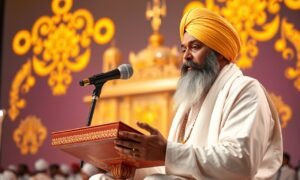
Figure: Conceptual Metaphysical Framework & Dialectical Architecture of Bhai Vir Singh.
Core Theological Pillars & Epistemology
To fully comprehend the lasting impact of this masterwork, scholars analyze four central metaphysical and epistemic pillars that elucidate the relationship between divine reality, human consciousness, and moral duty:
Rana Surat Singh & Spiritual Transformation
The epic depiction of Rani Raj Kaur’s journey from paralyzing personal grief over her husband’s death to supreme spiritual realization through meditation on the Divine Naam.
The Five Khands (Realms of Spiritual Ascent)
A poetic and psychological mapping of Guru Nanak’s five spiritual stages in Japji Sahib: Dharam Khand (Duty), Gyan Khand (Knowledge), Saram Khand (Effort), Karam Khand (Grace), and Sach Khand (Truth).
Revival of Gurmat Epistemology
Rescued Sikh hermeneutics from external syncretic distortions, rigorously re-establishing the Guru Granth Sahib as the sole, sovereign, and self-sufficient spiritual authority.
Mysticism of Nature and the Unseen
Infused everyday natural phenomena with immanent divine splendor, demonstrating that communion with Waheguru is experienced through quiet contemplation and heart-centered prayer.
Comparative Epistemic Matrix
The matrix below outlines the primary theological doctrines of Bhai Vir Singh against contrasting paradigms across world religious philosophy:
| Dimension | Bhai Vir Singh’s Synthesis | Philosophical & Modern Relevance |
|---|---|---|
| Ultimate Epistemic Authority | Demonstrative Harmony of Reason & Sacred Text | Overcomes both blind literalist fundamentalism and dry reductionist secularism. |
| Cosmic Relationship | Divine Immanence Grounding Real Causality | Affirms the reality of human responsibility and scientific intelligibility. |
| Spiritual Destiny | Loving Devotion, Right Action & Contemplation | Provides experiential fulfillment transcending theoretical abstraction. |
Frequently Asked Questions
What is the primary contribution of Bhai Vir Singh to Sikhism?
How does this framework address modern ethical and existential dilemmas?
Related Publications & Curriculum Pillars


Related Research & Authoritative Analyses
- › Mool Mantar Hermeneutics & Gurmat Gian: Giani Sant Singh Maskeen on Shabad Braham, Naam Simran & Divine Epistemology 2027
- › Anhad Shabad & Sovereign Spirit: Bhai Jagraj Singh Ji on Gurbani Contemplation, Naam Simran & Universal Brotherhood 2027
- › The Primordial Purity & The Rainbow Body: Padmasambhava on Dzogchen, Trekchö & The Bardo Thödol 2027
- › Bir Ras & Divine Ecstasy: Bhai Manpreet Singh Ji Kanpuri on Gurbani Kirtan, Sovereign Naam Simran & Khalsa Spirit 2027