Theological & Epistemic Briefing: Bhagat Kabir Ji (1398–1518 CE), the venerated mystic, weaver, and revolutionary poet of divine light, occupies a paramount position in the Sikh spiritual canon. With 541 hymns and saloks enshrined within Sri Guru Granth Sahib by Guru Arjan Dev Ji, Bhagat Kabir’s Bani represents the purest distillation of Nirguna Bhakti and Gurmat epistemology. Proclaiming the timeless truth ‘Awal Allah noor upaya, kudrat ke sab bande; Ek noor te sab jag upjiya, kaun bhale ko mande’ (First, Allah created the light; then, by His creative power He made all mortal beings; from the One Light, the entire universe welled up; so who is good, and who is bad?), Kabir demolished ritualism, sectarian dogma, and caste hegemony.
Historical Context & Doctrinal Lineage
The monumental legacy of Bhagat Kabir Ji in Sri Guru Granth Sahib represents a transcendent milestone in the spiritual history of Sikhism (Bhagat Bani in Gurbani / Gurmat Epistemology / Radical Universalism). By formulating profound metaphysics that synthesize personal devotion with ultimate ontological truth, this teaching continues to provide authoritative guidance for seekers and scholars across the globe.

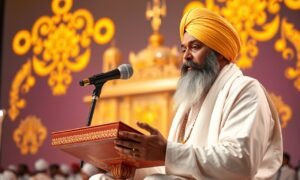
Figure: Conceptual Metaphysical Framework & Dialectical Architecture of Bhagat Kabir Ji in Sri Guru Granth Sahib.
Core Theological Pillars & Epistemology
Scholars analyze four primary pillars that constitute the foundation of this profound system of thought:
Awal Allah Noor Upaya (The Primacy of Divine Light)
All human beings share an identical spiritual origin in the Single Supreme Light of the Creator. Biological birth, social rank, and external rituals cannot divide what God has created as one.
Demolition of Caste & Ritualistic Dogma
Kabir ruthlessly challenged Brahminical ritual purity and sectarian hypocrisy, asking: ‘If you are a Brahmin born of a Brahmin mother, why didn’t you arrive by another path?’ True purity is purity of the heart.
Nirguna Bhakti (Devotion to the Formless One)
God is not contained within temples, mosques, idols, or pilgrimage sites. The Divine resides as an immanent presence within the lotus of the heart, realized through constant remembrance (Simran).
Living as a Householder (Grahast Marg)
Spiritual perfection does not demand renunciation of society or retreating to mountain caves. Kabir wove cloth at his loom, earning an honest living while remaining perpetually absorbed in the love of Ram and Allah.
Comparative Epistemic Matrix
The matrix below highlights the distinctive insights of Bhagat Kabir Ji in Sri Guru Granth Sahib in dialogue with overarching themes in global religious philosophy:
| Dimension | Bhagat Kabir Ji in Sri Guru Granth Sahib’s Synthesis | Philosophical & Modern Significance |
|---|---|---|
| Ultimate Reality & Consciousness | Transcendence Revealed Through Supreme Immanence | Dismantles cold intellectualism, unveiling the sacred mystery present within lived experience. |
| The Human Condition & Moral Duty | Radical Equality & Pure Devotion of the Heart | Overcomes social fragmentation, bigotry, and empty external ritualism. |
| Spiritual Destiny & Fulfillment | Complete Self-Realization in the Divine Light | Resolves existential anxiety and alienation through unitive peace. |
Frequently Asked Questions
What is the primary contribution of Bhagat Kabir Ji in Sri Guru Granth Sahib to Sikhism?
How does this framework address contemporary existential questions?
Related Publications & Curriculum Pillars


Related Research & Authoritative Analyses
- › The Shield of Conscience: Guru Tegh Bahadur Ji on Hind Di Chadar, Sacred Sacrifice & The Peace of Salok Mahalla 9 2027
- › The Sovereign Saint-Soldier: Guru Gobind Singh Ji on The Khalsa, Jaap Sahib & The Armor of Divine Light 2027
- › Guru Nanak Dev Ji: Mool Mantar Cosmology, Japji Sahib & The Three Pillars of Sikh Living 2027
- › What Happens When You Die? The Sikh Answer