Rabbinic Thought & Hasidism • Chabad-Lubavitch
Executive Briefing: Why God Created the World
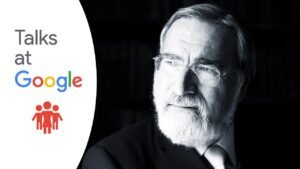
In this razor-sharp, intellectually fearless, and deeply mystical masterclass, world-renowned Chabad-Lubavitch Hasidic philosopher and bestselling author Rabbi Manis Friedman tackles the supreme cosmological and existential riddle: Why Did God Create the World? With his trademark wit, disarming simplicity, and piercing mastery of Chabad Chassidus (the Tanya of Rabbi Schneur Zalman of Liadi and the teachings of the Lubavitcher Rebbe), Rabbi Friedman demolishes simplistic childhood answers that portray God as a lonely or needy deity craving praise. He reveals the profound Kabbalistic secret of Dirah B’Tachtonim (A Dwelling Place in the Lowest Realm), distinguishing between a selfish ‘need’ and an unmotivated divine ‘desire’ (Ta’avah). He explores why God allowed sin, darkness, and suffering to exist: to provide human beings with genuine moral agency to transform physical darkness into blinding divine light. Below, Sapiotic documents the verbatim transcript, Lurianic Kabbalistic cosmologies, Tikkun matrices, and video timestamp guide.
Watch the original discourse above by Rabbi Manis Friedman while studying the verbatim spoken transcript, theological frameworks, and classical doctrines below.
1. Video Transcription: Step-by-Step Spoken Words & Core Arguments by Rabbi Manis Friedman
In this electrifying discourse, Rabbi Manis Friedman challenges listeners to abandon the self-centered consumer mindset of ‘What can God do for me?’ and ask the mature existential question: ‘What does God need from me?’. Below is the step-by-step breakdown:
A. Divine Need vs. Divine Desire (Ta’avah)
Spoken Guidance in Video: Rabbi Manis Friedman opens by exposing centuries of theological confusion:
“Why did God create the world? People say: ‘God was lonely, so He made humans!’ Or: ‘God needed love!’ That is complete nonsense!
If God is truly the Infinite, Perfect Creator, He has zero deficiencies! A hungry man needs bread; a lonely man needs company; an insecure king needs subjects to bow down and praise him! But God has no needs whatsoever!
If God did not NEED the world, why did He make it? Because He DESIRED it!
There is a massive metaphysical difference between a need and a desire:
– A Need is about YOU: If I need you, I am using you to satisfy my hunger.
– A Desire is about the OTHER: If I desire you, I am dedicated to your existence!
Creation is not about God getting something; creation is the selfless manifestation of divine desire!”
Nit’aveh HaKadosh Baruch Hu Liheyot Lo Dirah B’Tachtonim (Midrash Tanchuma)
Theological Nuance: Ontological distinction between deficient need (Chisaron) and sovereign desire (Ta’avah): divine creation is an uncaused, unmotivated act of sheer altruistic purpose.
B. Dirah B’Tachtonim: The Mystery of the Lowest Realm
Spoken Guidance in Video: Rabbi Friedman unpacks the foundational Kabbalistic doctrine from the Midrash and the Tanya: ‘The Holy One desired a dwelling place in the lowest world (Dirah B’Tachtonim).’ He asks:
“Why the lowest realm? In the highest spiritual realms (Atzilut, Beriah, Yetzirah), divine light is blindingly obvious! Angels stand in total transparency; they have no ego and no capacity to rebel. That is easy!
God said: ‘I don’t just want a home in a palace of light; I want a home in the mud!’
Our physical world is the lowest realm because here, God is completely hidden (Tzimtzum)! Here, an atheist can look at a tree and say: ‘Nature did it!’ Here, darkness, confusion, and temptation are thick!
God made this dark realm so that fragile human beings, through their moral free will, can choose to be kind, choose to overcome greed, and flip physical darkness into light! Making God at home in a dark world brings the Almighty infinite delight!”
Dirah B’Tachtonim (A Home for God in the Lowest Physical Realm)
Theological Nuance: Teleology of the material cosmos: radical divine concealment (Tzimtzum) creates the necessary epistemic distance for meaningful creaturely moral heroism.
C. Why God Allowed Sin: The Secret of Resistance
Spoken Guidance in Video: Rabbi Friedman fearlessly tackles the existence of the evil inclination (Yetzer Hara):
“Why did God allow sin and temptation to exist? Look at physical exercise: a weightlifter goes to the gym. Why does he pick up a heavy iron barbell? Why doesn’t he lift a balloon? Because a balloon offers zero resistance! If the weights weigh nothing, your muscles cannot grow!
Temptation, lust, greed, and the evil inclination were created by God as divine resistance! Without temptation, doing good is a meaningless biological accident! When you are angry and you swallow your rage, when you want to take corrupt money and you refuse out of honesty, you just lifted 500 pounds of spiritual weight! That victory shakes the entire cosmos!”
Yetzer Hara (The Evil Inclination as Divine Resistance)
Theological Nuance: Functional theodicy of temptation: moral virtue possesses ontological weight only when forged through genuine resistance against baser inclinations.
D. The Shift: From ‘What Do I Need?’ to ‘What Does God Want?’
Spoken Guidance in Video: Rabbi Friedman challenges modern religious narcissism: “We live in a consumer culture where people ask: ‘What can religion do for me? How can God make me rich? How can meditation give me peace?’
Stop asking what God can do for you! Start asking: ‘What does God want from me right now?’
You were born in this specific generation, with your specific family, your specific talents, and your specific struggles, because there is a corner of this universe that only YOU can illuminate! When you give charity, when you speak words of comfort to a depressed soul, when you sanctify your bread, you are fulfilling the primordial desire of the Almighty!”
Kavanah & Tikkun (Elevating the Sparks of Holiness)
Theological Nuance: Copernican spiritual revolution: decentering the human ego from self-centered spiritual consumerism to covenantal partnership in fulfilling the divine purpose.
2. Sapiotic Scholarly Analysis: Chabad Chassidus on the Four Worlds & Tzimtzum
A. The Hierarchy of the Four Worlds (Arba Olamot)
In the Kabbalah of the Arizal (Rabbi Isaac Luria) and the Tanya of the Alter Rebbe, the cosmic descent from infinite divine light (Ein Sof) into physical reality is mapped across four distinct realms:
| Cosmic Realm | Hebrew Name | Level of Divine Concealment | Soul’s Operational Task |
|---|---|---|---|
| 1. Emanation | Atzilut | Zero concealment. Total transparency of divine light (Bittul). | Pure divine will and wisdom; angelic contemplation. |
| 2. Creation | Beriah | First emergence of distinct creation; highest intellectual realm. | Cosmic throne; higher spiritual beings and intellect. |
| 3. Formation | Yetzirah | The emotional spiritual realm; angelic choirs. | Purifying the emotional faculties through devotion. |
| 4. Action (Our Physical World) | Asiyah | Extreme concealment (Tzimtzum). Matter appears independent of God. | The Supreme Goal! Transforming gross physical matter into a holy sanctuary via Mitzvot. |
B. Teshuvah (Repentance) as Cosmic Transformation
In Hasidic philosophy, the repentant sinner (Baal Teshuvah) reaches a higher ontological state than the perfectly righteous person (Tzaddik) who never sinned. As the Talmud states in Berakhot 34b: ‘In the place where a Baal Teshuvah stands, even the completely righteous cannot stand.’ Why? Because the Tzaddik only knows light. But the Baal Teshuvah has experienced the agonizing abyss of darkness, hunger, and brokenness; when he repents out of profound love, his past sins are miraculously converted into fuel for divine love (Zadonot na’asu lo ki-zekhuyot). He extracts holy sparks from the deepest mud, fulfilling the ultimate purpose of creation.
3. Common Spiritual Mistakes & Conceptual Pitfalls Highlighted by Rabbi Manis Friedman
In this address, Rabbi Manis Friedman warns the community against critical oversights and psychological self-deceptions that frequently undermine spiritual efforts:
-
Treating God as a Needy, Emotional Being:
Believing God created humans because He was lonely or insecure. God is self-sufficient; creation is an act of pure altruistic desire (Ta’avah). -
Practicing Religion as a Transactional Self-Help Tool:
Approaching God solely for personal emotional peace or worldly prosperity, rather than serving the Creator’s divine purpose. -
Despairing Over Personal Sins and Past Failures:
Believing one’s mistakes have ruined one’s soul forever. Hasidism teaches that sincere Teshuvah transforms past darkness into blinding light. -
Viewing Physical Matter as Cursed or Unholy:
Adopting ascetic Gnosticism. Physical matter is the supreme arena of holiness; eating, working, and family life are the instruments of Dirah B’Tachtonim.
4. Video Timestamp Reference Guide (PJn48y1hB9Q)
Use this chronological reference index to navigate directly to the specific explanations and demonstrations in Rabbi Manis Friedman’s recorded discourse:
| Timestamp | Action in Video | Spoken Focus & Practical Instruction |
|---|---|---|
| 00:00 – 02:45 | Intro: Demolishing Simplistic Theologies | Why God didn’t make the world out of loneliness; need vs. desire. |
| 02:46 – 07:30 | Dirah B’Tachtonim (A Dwelling in the Mud) | The lowest physical realm, Tzimtzum, and why angels cannot fulfill God’s goal. |
| 07:31 – 12:45 | Why God Allowed Sin & The Weightlifter | The evil inclination as divine resistance, building spiritual muscle through struggle. |
| 12:46 – 17:30 | The Copernican Shift in Faith | Stop asking what God can do for you; ask what God needs from you right now. |
| 17:31 – 22:15 | Teshuvah & Elevating Holy Sparks | How the broken-hearted repentant soul reaches higher than angels, and closing blessings. |
5. Frequently Asked Questions (FAQ)
Authoritative scriptural and practical clarifications addressing the most common inquiries regarding this discourse:
Q: Why did God create the world according to Rabbi Manis Friedman?
God did not create the world out of a selfish ‘need’ (since the Infinite lacks nothing), but out of an unmotivated divine ‘desire’ (Ta’avah) to have a dwelling place in the lowest, darkest realm (Dirah B’Tachtonim), where free human beings could voluntarily transform darkness into light through righteous deeds.
Q: What is ‘Dirah B’Tachtonim’ in Chabad Hasidic thought?
It is a foundational Midrashic and Kabbalistic concept meaning ‘a home in the lower worlds’. It reveals that the purpose of creation is not for souls to escape to heaven, but to bring heaven down to earth, sanctifying physical matter through daily ethical actions, love, and sacred commandments.
Q: Why does Rabbi Friedman say the evil inclination is like a weightlifter’s barbell?
Because without physical resistance, muscles cannot grow; similarly, without temptation and moral struggle, virtue would be a meaningless biological instinct. The evil inclination provides the resistance necessary for human moral heroism.