Protestantism & Evangelical • Give Me An Answer
Executive Briefing: Why Does God Allow Suffering
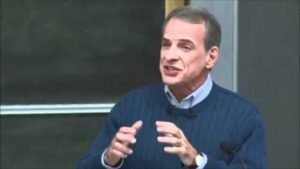
In this raw, electrifying university campus dialogue, seasoned open-air Christian apologist Pastor Cliffe Knechtle (Give Me An Answer) tackles the most poignant challenge to religious faith: The Problem of Evil and Human Suffering. Confronted by skeptical university students wrestling with wars, childhood diseases, and genocide, Pastor Cliffe delivers a fearless, intellectually unyielding, and pastorally compassionate Christian theodicy. Grounding his defense in the reality of human moral freedom, the fall of creation (Genesis 3), and the profound revelation of a God who did not observe human agony from a detached throne, but entered human agony upon the bloody Roman Cross of Calvary, Cliffe provides an unshakeable existential answer. Below, Sapiotic documents the verbatim transcript, philosophical theodicies, apologetic refutations, and video timestamp guide.
Watch the original lecture above by Cliffe Knechtle while studying the verbatim spoken transcript, theological frameworks, and classical doctrines below.
1. Video Transcription: Step-by-Step Spoken Words & Core Arguments by Cliffe Knechtle
In this impassioned university debate, Cliffe Knechtle confronts cynical accusations against God with raw authenticity, combining classical logic with the emotional reality of human brokenness. Below is the step-by-step breakdown:
A. The Dilemma of Free Will: Love Requires the Risk of Rejection
Spoken Guidance in Video: Cliffe Knechtle confronts a student asking: ‘If God is all-powerful, why doesn’t He stop murder, rape, and war?’ Cliffe responds with unyielding clarity:
“Because God wanted real love, not programmed robots! Think about it: could God have created a world where nobody ever did evil? Yes! He could have created wooden puppets or computer programs where every time you reach for a gun, your hand freezes, or every time you say a hateful word, your mouth seals shut. But puppets cannot love! Love, by definition, requires free choice! And the moment God gave human beings genuine moral freedom—the capacity to say ‘I love you’—He inherently gave them the terrifying capacity to say ‘I hate you, I will steal from you, I will murder you!’ Don’t blame God for the evil humans freely choose to commit!”
Genesis 1:27 & Deuteronomy 30:19
Theological Nuance: Plantinga’s Free Will Defense: Moral evil is the tragic byproduct of genuine creaturely freedom, which is an indispensable prerequisite for moral good and authentic love.
B. The Double Standard: ‘God, Eliminate Evil… But Start with Me!’
Spoken Guidance in Video: Cliffe challenges the intellectual arrogance of those demanding God immediately wipe all evil off the face of the earth:
“You say: ‘God, if You are good, wipe out all evil tonight at midnight!’ But let me ask you: if God wiped out all evil from the planet tonight at midnight, where would YOU be at 12:01 AM? Would you survive? Would I survive? Have you ever lied? Have you ever had lust in your heart? Have you ever been bitter, selfish, or arrogant? If God eliminated all evil tonight, He would have to eliminate every single one of us! The only reason this world exists right now is because God is patient, waiting for people to repent!”
2 Peter 3:9 (The Lord is patient toward you)
Theological Nuance: Demanding immediate divine annihilation of evil ignores that every human heart is implicated in moral failure; divine delay is an act of redemptive mercy.
C. The God Who Weeps and Bleeds: The Mystery of the Cross
Spoken Guidance in Video: Cliffe pivots to the singular uniqueness of Christianity in the face of suffering: “Every other philosophy or religion gives you an explanation for suffering: karma says you deserve it from a past life; atheism says you are blind biological meat suffering in a cold, meaningless universe! But Christianity gives you a God who stepped down into the mud! When Jesus stood at the tomb of His friend Lazarus, the shortest verse in the Bible says: ‘Jesus wept’ (John 11:35). God weeps with us! And then He went to the Cross. On the Cross, God did not spare Himself; He endured horrific physical torture, public humiliation, and the spiritual agony of carrying the world’s sin. When you are suffering in a hospital bed, you are not crying out to a distant cosmic dictator; you are crying out to a Savior who has scars in His hands and feet!”
John 11:35 & Isaiah 53:3-5 (Man of Sorrows)
Theological Nuance: Christianity’s unique resolution to suffering is incarnational co-suffering: God participates directly in human tragedy, transforming torture into the instrument of redemption.
D. Natural Disasters & The Groaning Creation (Romans 8)
Spoken Guidance in Video: Addressing diseases and earthquakes, Cliffe references Romans 8: “The world we are living in right now is not the pristine world God originally designed! Genesis tells us that when human rebellion entered, creation itself fractured. Creation was subjected to frustration and decay. Viruses, earthquakes, and cancer are symptoms of a fallen, broken world groaning for restoration! But the promise of Christianity is not that we escape to a cloud; the promise is that God will resurrect our bodies and restore this earth into a New Heaven and New Earth where there will be no more death, mourning, crying, or pain!”
Revelation 21:4 (No more death or mourning)
Theological Nuance: Cosmic theodicy accounts for physical evil through cosmological fall and redemption: suffering is not the final chapter, but the labor pains of ultimate renewal.
2. Sapiotic Scholarly Analysis: Alvin Plantinga’s Free Will Defense & Theodicy Models
A. Systematic Breakdown of Classical Christian Theodicies
Philosophical Christian apologetics articulates several complementary models to resolve the classical logical and evidential Problem of Evil formulated by Epicurus and David Hume:
| Theodicy Model | Key Proponent | Core Philosophical Argument | Response to Skepticism |
|---|---|---|---|
| Free Will Defense | Alvin Plantinga | It is logically impossible for God to create genuinely free creatures who are guaranteed never to choose evil. | Evil is the fault of creaturely agency, not divine defect. |
| Soul-Making Theodicy | Irenaeus of Lyons / John Hick | The world is not a hedonic pleasure resort; it is a spiritual gymnasium designed for moral and spiritual maturity. | Courage, compassion, and endurance cannot exist without real danger and suffering. |
| Cruciform Incarnational Theodicy | Jürgen Moltmann / C.S. Lewis | God participates in the suffering of the world through the Incarnation and Crucifixion of Christ. | Refutes the claim that God is indifferent or callous toward human pain. |
| Eschatological Vindication | St. Paul (Romans 8:18) | The eternal weight of glory in the resurrected new creation will infinitely outweigh present suffering. | Suffering is temporary, contextualized within an eternal horizon of restoration. |
B. The Moral Argument Against Atheistic Indignation
Cliffe Knechtle points out the fatal philosophical flaw in the atheist who uses evil to disprove God: To declare that suffering is ‘evil’ or ‘unjust’, one must presuppose an objective moral standard of justice. But in a strictly materialistic, godless universe governed solely by unguided Darwinian evolution, there is no such thing as objective evil—there is only blind physical survival of the fittest. As C.S. Lewis famously argued in Mere Christianity: ‘My argument against God was that the universe seemed so cruel and unjust. But how had I got this idea of just and unjust? A man does not call a line crooked unless he has some idea of a straight line.’ By declaring war or cancer to be morally wrong, the skeptic implicitly appeals to a transcendent moral law that only God can ground.
3. Common Theological Mistakes & Spiritual Pitfalls Highlighted by Cliffe Knechtle
In this address, Cliffe Knechtle warns the community against critical oversights and conceptual misconceptions that distort sacred doctrine:
-
Treating the Problem of Evil Purely as an Abstract Puzzle:
Offering cold academic philosophy to a grieving mother who just lost her child. Pastoral compassion must always precede intellectual debate. -
Claiming God Deliberately Causes Every Specific Tragedy:
Telling victims ‘God gave your child cancer to teach you a lesson’. Disease is a manifestation of a fallen creation, not divine malice. -
Borrowing Christian Morality to Condemn God:
Assuming the universe should be just and loving while holding an atheistic worldview where morality is just subjective chemical wiring. -
Assuming If We Can’t See God’s Reason, No Reason Exists:
The fallacy of noseeum inference: a child cannot understand why a doctor inflicts the pain of a vaccine, but the doctor possesses greater wisdom.
4. Video Timestamp Reference Guide (e9-O2ST-yms)
Use this chronological reference index to navigate directly to the specific explanations and demonstrations in Cliffe Knechtle’s recorded lecture:
| Timestamp | Action in Video | Spoken Focus & Practical Instruction |
|---|---|---|
| 00:00 – 02:40 | Student Challenge & The Free Will Dilemma | The campus confrontation, why robots cannot love, and the reality of moral choice. |
| 02:41 – 06:15 | Midnight Eradication of Evil | The double standard of human self-righteousness and the universal guilt of humanity. |
| 06:16 – 11:30 | The Weeping and Bleeding God | The tears at Lazarus’ tomb, the Crucifixion, and Christ carrying human agony. |
| 11:31 – 16:20 | Natural Disasters & Romans 8 | The fractured creation, groaning world, and the promise of ultimate resurrection. |
| 16:21 – 20:30 | CS Lewis Moral Argument & Conclusion | How the concept of objective injustice proves the existence of a Transcendent Standard. |
5. Frequently Asked Questions (FAQ)
Authoritative theological and practical clarifications addressing the most common inquiries regarding this lecture:
Q: Why didn’t God create a world where humans could choose, but only choose good?
Because choosing between two options where one option is physically impossible is not free choice; it is an illusion. Genuine moral agency requires the genuine possibility of selecting the negative.
Q: Why do innocent children suffer from diseases?
Christian theology teaches that the physical universe is currently under the curse of the Fall (Romans 8). Cellular mutations, viruses, and natural catastrophes are part of a broken cosmic system groaning for ultimate renewal.
Q: How does the Cross of Christ address my personal pain?
The Cross proves that God is not a remote spectator immune to pain. God entered human vulnerability in Jesus Christ, endured abandonment, torture, and death, and conquered death through the Resurrection, promising eternal restoration to all who trust Him.