Shinto Theological Briefing: Motoori Norinaga Shinto Mono no Aware Kami
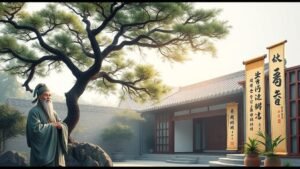
Edo-period scholar Motoori Norinaga (1730–1801 CE) transformed Japanese cultural self-understanding through his monumental commentary on the Kojiki and The Tale of Genji. Against rigid moralistic rationalism, Norinaga elevated ‘Mono no Aware’—the tender, poignant sensitivity to the fleeting beauty of existence—as the true bridge between human sincerity (Magokoro) and the numinous presence of Kami.
Why Mono no Aware Is Strength, Not Weakness
Whereas strict Neo-Confucian moralists dismissed emotional grief or longing as irrational weakness, Norinaga argued that feeling deeply moved by falling cherry blossoms, autumn wind, or human heartbreak reveals an uncorrupted, authentic heart capable of genuine compassion.

Kami as Awe-Inspiring Presence Beyond Human Calculation
For Norinaga, ‘Kami’ encompasses any extraordinary force—mountains, storms, ancestral spirits, or radiant beauty—that awakens existential awe beyond neat scholastic syllogisms, grounding Shinto practice in purification (Harae) and gratitude.
Key Takeaways & Actionable Insights (Motoori Norinaga Shinto Mono no Aware Kami)
Readers and practitioners evaluating this shift should anchor decisions around three verified operational coordinates:
- Sensitivity to Impermanence: Cherishing fleeting moments because they cannot remain forever.
- Sincere Heart (Magokoro): Authentic emotional honesty unmasked by artificial intellectual posturing.
- Living Ecological Reverence: Preserves sacred shrine forests (Chinju no Mori) across urban Japan.
Comparative Benchmark Matrix
| Shinto Aesthetic Concept | Meaning | Cultural Expression |
|---|---|---|
| Mono no Aware | Bittersweet resonance with transient beauty | Cherry blossom viewing & classical poetry |
| Magokoro | Pure, unfeigned sincere heart | Ritual purification & earnest hospitality |
| Kami Immanence | Sacred awe within natural phenomena | Protected cedar groves & mountain shrines |
Frequently Asked Questions
What does ‘Mono no Aware’ mean in Japanese philosophy?
How does Shinto view nature compared to Western philosophy?
Related Publications & Curriculum Pillars


Related Research & Authoritative Analyses
- › Live Fadak with Yahya Arfi Questions and Answers | شیعہ سنی مناظرات | اللہیاری | Hassan Allahyari
- › The Constitution of Medina (Mithaq al-Madinah): Prophetic Civic Pluralism & Shared Governance 2027
- › The Lonely Man of Faith & Halakhic Epistemology: Rabbi Joseph B. Soloveitchik on Existential Dialectics, Torah & Modernity 2027
- › Spiritual Adab, Parental Rights & Youth Awakening: Sayed Aminul Qadri on Prophetic Character in Contemporary Society 2027